
What is Sterling Silver? The Science of 925 Silver Explained
 A P Jewellers
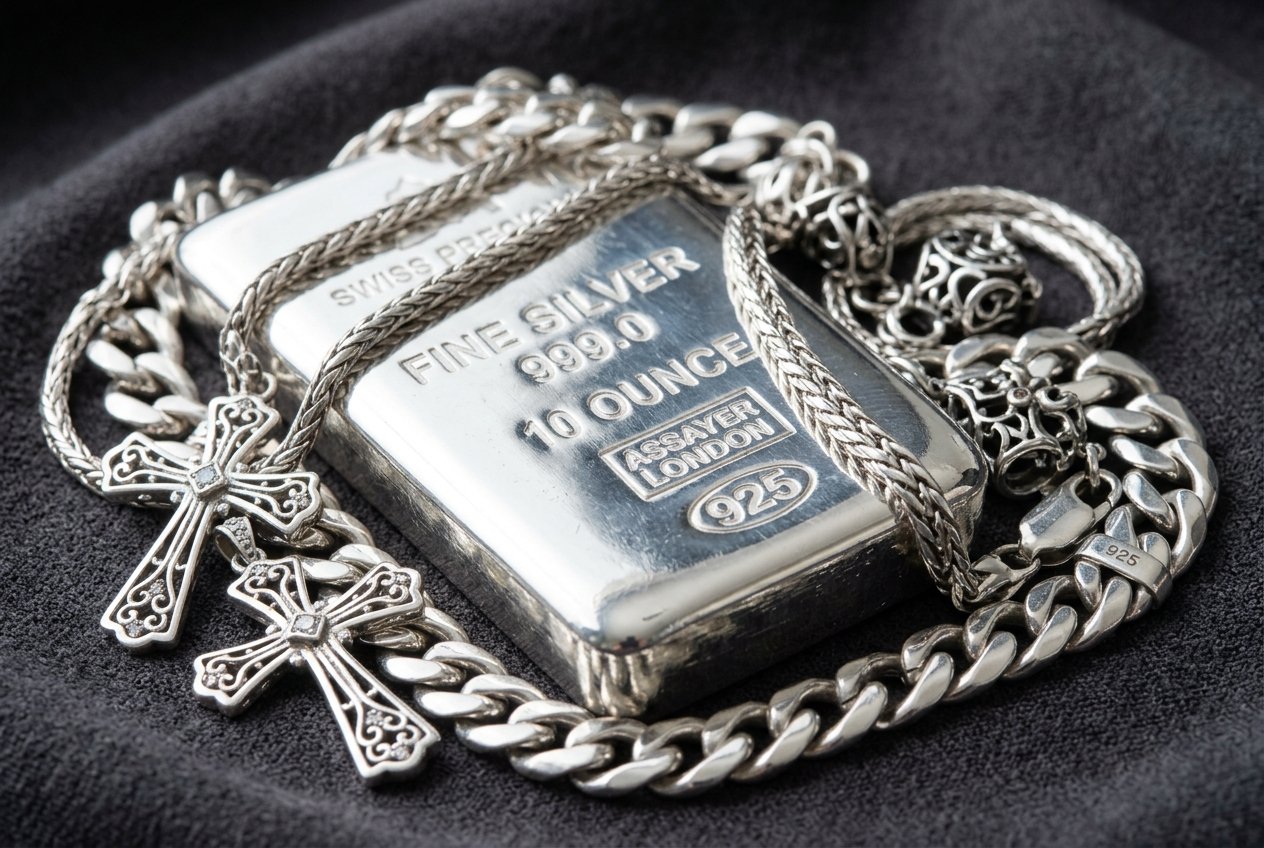
When shopping for silver jewelry, tableware, or accessories, you will frequently see the piece stamped with the numbers "925" or the word "Sterling." This is not just a random serial number or a brand name. It is a globally recognized metric of metallurgical purity and quality. To understand why this standard exists, we have to look closely at the physical science of precious metals, chemical engineering, and structural durability.
📊 Quick Summary: Pure Silver vs. Sterling Silver
If you need a quick overview before diving into the core science, here is how the two primary forms of silver stack up against each other:
| Feature | Fine Silver (999 Silver) | Sterling Silver (925 Silver) |
|---|---|---|
| Silver Purity | 99.9% Pure Silver | 92.5% Pure Silver |
| Alloy Content | 0.1% Trace Elements | 7.5% Hardening Metals (Usually Copper) |
| Material Hardness | Extremely soft, easily bent | High structural rigidity and strength |
| Primary Use Cases | Investment bullion, coins, delicate accents | Everyday fine jewelry, rings, cutlery, watches |
| Standard Hallmarks | 999, Fine Silver | 925, S925, Sterling, Ster |
🧪 The Metallurgy: Understanding 92.5% Purity
In its absolute pure state, silver is an element (Ag on the periodic table) known for its incredible brilliance, high thermal conductivity, and reflectivity. However, pure 99.9% silver (Fine Silver) is impractical for structural objects. It is exceptionally soft, highly malleable, and easily scratched or warped out of shape under minimal physical pressure.
To solve this mechanical limitation, scientists and ancient metallurgists discovered that blending pure silver with other base metals creates an alloy—a mixture of two or more chemical elements where at least one is a metal:
Pure Silver (92.5%) + Copper/Alloys (7.5%) = 925 Sterling Silver
By precisely maintaining a ratio of 92.5% pure silver and 7.5% alloy metals, the resulting material achieves an optimal metallurgical balance. The extra 7.5% fills the micro-gaps in the crystal lattice structure of pure silver, significantly increasing its tensile strength and resistance to mechanical wear while completely preserving the iconic, premium luster of the precious metal.
🔬 Why Copper is the Chosen 7.5% Alloy
While modern manufacturing labs can theoretically mix silver with any number of elements, copper remains the gold standard alloy partner for sterling silver:
- Atomic Size Matching: Copper atoms slide cleanly into the gaps of silver's molecular matrix, interlocking the structures without creating brittle fracture lines.
- Preserving Color: Copper does not significantly alter the beautiful, mirror-like white reflection of pure silver.
- Alternative Alloys: In niche manufacturing, elements like zinc, boron, silicon, or germanium are occasionally introduced. These advanced formulations (such as Argentium silver) reduce the material's susceptibility to tarnishing, though they often carry a higher manufacturing price tag.
🔎 How to Identify and Verify Genuine Sterling Silver
Because fake plating can mimic the appearance of silver, regulatory bodies enforce strict hallmarking laws to protect consumers. Always use these verification tests before buying:
- Inspect the Official Hallmarks: Look for microscopic stamps pressed into inconspicuous areas (like the inner wall of a ring band or the clasp of a chain). Genuine marks include: 925, S925, Sterling, or Ster.
- The Magnet Testing Protocol: Silver is diamagnetic, meaning it does not attract magnets. Pass a strong neodymium magnet over the item. If the piece strongly snaps or clings to the magnet, it is made of a cheap iron, nickel, or steel base metal core disguised with a thin silver coating.
- Physical Weight and Density Assessment: Silver is a dense precious metal. If an item feels suspiciously light weight, hollow, or has a tinny sound when lightly tapped against a solid surface, it is likely a counterfeit aluminum or plastic composite.
🧼 Tarnish Science: Why Sterling Silver Oxidizes
The main drawback of sterling silver is tarnish—a dark layer of corrosion that gradually dulls the surface. Scientifically, this is not caused by oxygen. Instead, the copper inside the 925 alloy reacts with hydrogen sulfide gas found naturally in our atmosphere and sweat. This reaction produces a microscopic film of silver sulfide, which turns the metal dull yellow, brown, or black over time.
Simple Mitigation Strategies:
- Wear it Often: The natural oils from your skin gently polish the metal and slow down the sulfidation process.
- Store Sealed: When not in use, store your 925 silver in air-tight zip bags or specialized anti-tarnish fabric pouches to lock out ambient moisture and air pollution.
- Avoid Abrasives: Clean tarnished pieces using a specialized micro-fiber jewelry polishing cloth rather than abrasive chemical pastes which can scrape off microscopic layers of silver.
Coordinate Custom Ornaments
Have questions about gold purities, bis certifications, or design rates discussed in this article? Chat with our experts directly.