Mangalsutra Weight & Design Guide: Purity, Grams & Price in Gujarat
 A P Jewellers
How Mangalsutra Weight, Gold Purity & Design Style Determine Total Price
Key Takeaway: A mangalsutra's final cost is governed primarily by its net gold weight in grams (excluding black beads), gold purity (22K BIS 916 vs 18K BIS 750), pendant craftsmanship (single vs double Gujarati vati), and a combined 3% statutory GST rate. Black bead mani chains reduce total gold weight while maintaining full visual length, making them ideal for lightweight daily wear.
What Makes a Mangalsutra Different From Standard Gold Necklaces?
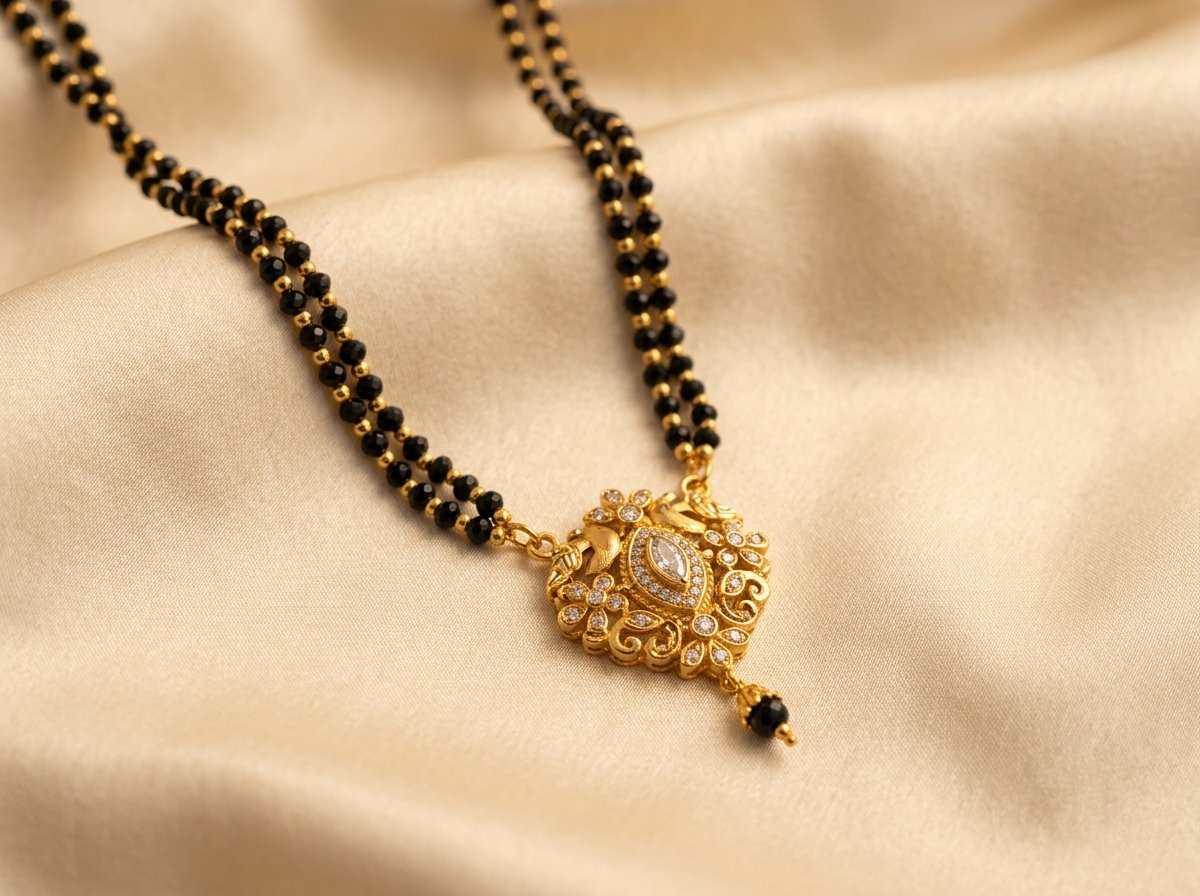
A mangalsutra is a sacred, symbolic gold necklace worn by married women in Hindu tradition. Unlike standard solid gold chains, a mangalsutra features auspicious black onyx or glass beads (black mani) strung alongside hallmarked gold wires or chains, anchored by a central gold pendant (known in Gujarat as a vati or tanmaniya). Its financial value is calculated strictly on the net weight of precious gold and gemstones, excluding non-metallic beads.
A mangalsutra is one of the few pieces of fine jewellery bought for deep cultural meaning first and personal style second — but that does not make the buying decision simple. Weight, gold purity, chain style, and pendant complexity all move the price, sometimes significantly, even between two mangalsutras that look similar on a showroom display tray.
Whether you are selecting a minimal daily-wear chain for office comfort or an ornate 22K gold double-vati mangalsutra for a traditional Gujarati wedding in Sabarkantha, this master guide by A P Jewellers in Prantij breaks down exact gram categories, purity differences, making charges, and invoice math so you buy with total clarity.
📊 Quick Summary: What Affects Mangalsutra Price in Gujarat
A practical comparison of how core design elements influence metal weight and overall invoice cost.
| Design Factor | Typical Specifications | Impact on Price & Making Charges |
|---|---|---|
| Gold Purity | 22K (916) most common; 18K (750) for diamond setting | Higher purity = higher base rate per gram. 22K retains maximum long-term bullion resale value. |
| Net Gold Weight | Light: 2–5g • Medium: 5–10g • Heavy/Bridal: 10g–25g+ | Primary cost driver — total gold weight multiplied directly by the daily hallmarked gold rate. |
| Chain Style | Black bead (mani) strand vs. 22K solid gold wire chain | Black bead chains use less gold metal for the same visual length, keeping overall cost lower. |
| Pendant / Vati Style | Single Vati, Double Gujarati Vati, Diamond Tanmaniya | Intricate filigree or diamond setting increases craft making charges (approx. 12%–20%). |
| Making Charges | Plain chain: 8%–12% • Ornate Vati / Diamond: 14%–22% | Calculated per gram or as a fixed percentage on metal subtotal, reflecting artisan labor. |
*Note: Exact weight and prices vary by catalog design. All gold purchases carry a 3% statutory GST on the combined subtotal.
🔎 What Makes a Mangalsutra Different From Other Necklaces?
In traditional Indian goldsmithing, a mangalsutra is distinguished by three key structural components that directly affect both its aesthetic presence and financial valuation:
Net Gold Content
Gold is concentrated in the central pendant and gold chain segments. The black beads themselves carry zero metal scrap value and are weighed separately.
Artisan Craftsmanship
Pendant detailing — hand filigree, dual-shell embossing, enamel (Meenakari), or prongs for diamonds — determines labor charges above raw gold rates.
Gujarati Regional Style
Gujarati family tradition favors the iconic Double Vati (two floral gold shells symbolizing Peehar and Sasural) paired with structured black-and-gold bead links.
✨ Choosing the Right Purity: 22K (916) vs 18K (750) Gold
The purity of gold selected for your mangalsutra determines its color tone, daily wear resistance, and long-term investment liquidity. In India, official Bureau of Indian Standards (BIS) rules require 6-digit HUID hallmarking on all purities.
| Gold Purity Standard | Gold Fine Content | Best Suited For | Resale & Durability Profile |
|---|---|---|---|
| 22K Gold (BIS 916 HUID) | 91.6% Pure Gold | Classic gold Vati pendants, traditional bead chains, and ancestral family pieces. | Rich deep-yellow luster; maximum bullion exchange liquidity across India. |
| 18K Gold (BIS 750 HUID) | 75.0% Pure Gold | Diamond-studded Tanmaniya pendants, contemporary lightweight sleek designs. | Enhanced structural hardness for securing natural diamonds; lower per-gram metal cost. |
⚖️ Mangalsutra Weight Categories & Real Invoice Price Example
Gold weight is the single largest multiplier in your purchase. Here is how mangalsutra gram weights are categorized in North Gujarat:
2 to 5 Grams
Single small gold Vati or sleek bar pendant with a lightweight black bead string. Perfect for daily office wear, western attire, and subtle comfort.
5 to 10 Grams
Traditional 22K Gujarati double-vati pendant with reinforced black bead chain. Excellent balance of classic presence, durability, and daily comfort.
10 to 25+ Grams
Elaborate bridal sets, multi-strand gold black-bead chains, temple artwork pendants, or heavy floral carved double-vati pieces worn for weddings and festivals.
Worked Calculation Example: 8 Gram 22K Gujarati Double-Vati Mangalsutra
Illustrative sample invoice calculation for a popular 8-gram net gold mangalsutra at an assumed 22K gold market rate of ₹6,800/gram:
*Note: Live gold rates change daily. Always request an itemized tax bill detailing net gold weight and BIS HUID code.
💡 How to Choose the Right Mangalsutra: 4 Essential Steps
Follow this simple decision framework to select the ideal mangalsutra for your budget and lifestyle.
Decide Daily-Wear vs. Occasion-Wear First
Daily-wear pieces require sturdy 22K solder joints and lighter weights (3g–8g). Occasion pieces allow heavier ornamental filigree or intricate double-vati designs.
Verify the Net Gold-to-Bead Weight Ratio
Always confirm that the jeweler weighs black beads separately. You should pay gold rates strictly for the net gold grams, never for bead weight.
Insist on BIS 6-Digit HUID Hallmarking
Ensure both the gold pendant (vati) and chain end-clasps carry laser-etched 6-character BIS HUID stamps guaranteeing 22K (916) or 18K (750) purity.
Compare Making Charges Across Vati Designs
Compare craftsmanship making charges separately from gold metal rates. Plain bead chains have lower making charges than hand-carved floral double-vati pendants.
💬 Master Goldsmith Advice: Selecting a Durable Family Mangalsutra
"In Sabarkantha, a mangalsutra is a lifelong ornament passed through generations. When crafting a 22K double-vati mangalsutra, we reinforce the gold jump-rings securing the black mani beads. If you wear your mangalsutra every day while doing household tasks, choose a solid 22K gold wire-loop bead construction over delicate thread strings for maximum longevity."
❓ Mangalsutra Weight & Price FAQs
Clear, authoritative answers to high-intent questions asked by buyers in Gujarat.
What is the typical gold weight for a daily-wear Gujarati mangalsutra?
Daily-wear mangalsutras typically range from 3 to 8 grams of 22K (916) gold. This includes a lightweight black bead (mani) chain paired with a sleek single or small double-vati gold pendant for comfortable all-day wear.
Should I choose 22K (916) or 18K (750) gold for a mangalsutra?
Choose 22K gold (BIS 916 HUID) for traditional gold vati designs aimed at traditional durability, rich yellow tone, and maximum long-term resale value. Choose 18K gold (BIS 750 HUID) if you prefer diamond-studded tanmaniya pendants where higher metal hardness is needed for stone setting.
Do black beads count towards the total gold weight of a mangalsutra?
No. Reputable jewelers calculate net gold weight separately from non-precious black onyx or glass beads. Your tax invoice and official BIS 6-digit HUID hallmark certificate will explicitly specify the net gold weight in grams.
How do making charges vary between plain gold mangalsutras and diamond pendants?
Plain black bead chains with simple gold loops feature lower making charges (approx. 8% to 12%), whereas hand-engraved Gujarati double-vati pendants or diamond-set tanmaniya designs carry making charges between 14% and 22% due to hand-filigree and stone-setting labor.
What is the cultural significance of the Gujarati double-vati mangalsutra?
In Gujarati Hindu tradition, the double-vati pendant features two floral hollow gold shells. They symbolize the lifelong union and emotional harmony between the bride’s maternal home (Peehar) and her marital home (Sasural).
Coordinate Custom Ornaments
Have questions about gold purities, bis certifications, or design rates discussed in this article? Chat with our experts directly.