
Understanding Gold Purity: The Ultimate Karat Guide (14K, 18K, 22K)
 A P Jewellers
Understanding Gold Purity: The Ultimate Karat Guide (14K, 18K, 22K)
Everything you need to know about gold karats, purity percentages, and BIS hallmarking — explained simply.
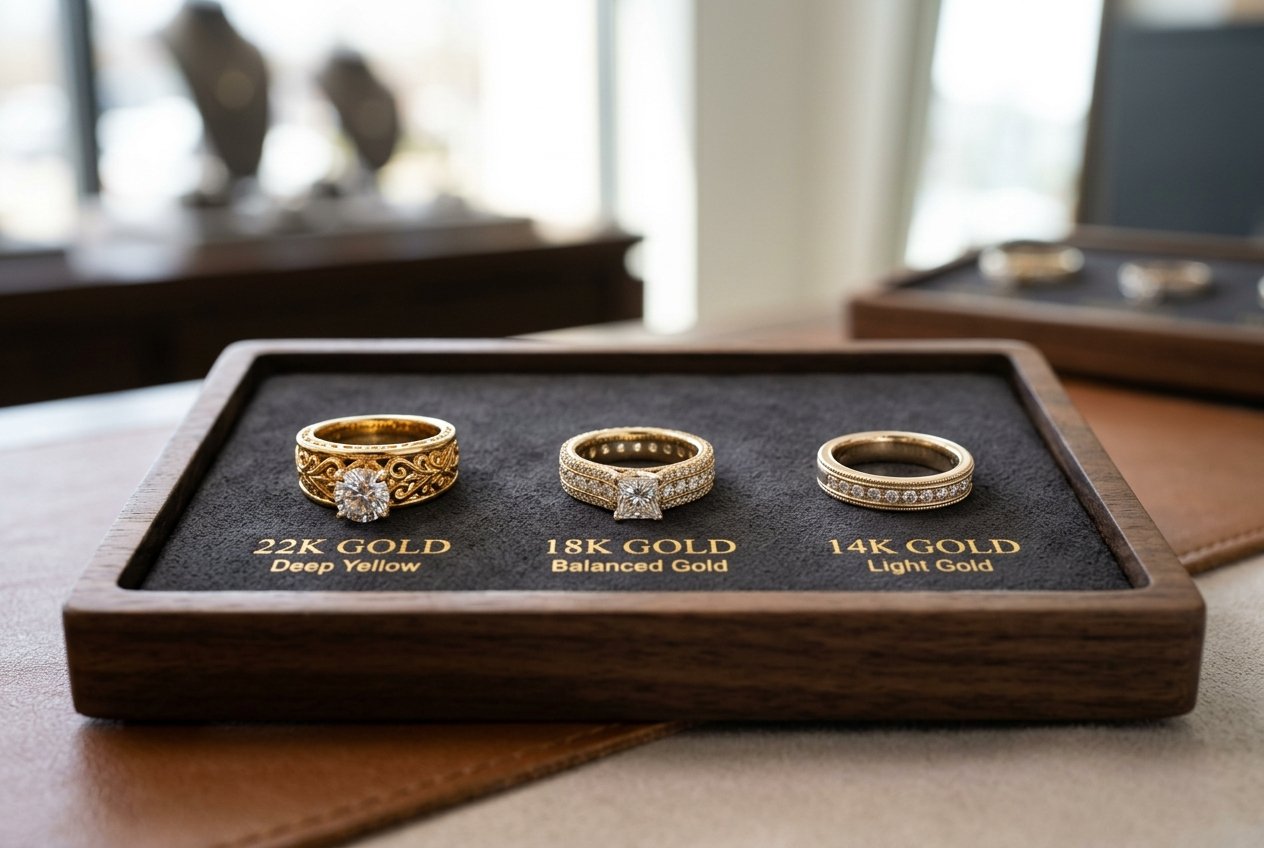
Gold purity is measured in karats (K), a scale that tells you how many parts out of 24 are pure gold. The remaining parts are alloy metals — usually copper, silver, or zinc — added for strength and durability. 24K gold is 99.9% pure but far too soft for daily-wear jewellery. That's why most jewellery is made in 22K (91.6% pure), 18K (75% pure), or 14K (58.3% pure) — each offering a different balance of purity, durability, and price.
📊 Quick Summary: Gold Purity at a Glance
If you want a fast answer before you shop, this table breaks down exactly what each karat rating means:
| Karat Rating | Gold Percentage | Parts Pure Gold (out of 24) | BIS Hallmark Number | Common Alloys | Best Used For |
|---|---|---|---|---|---|
| 24K | 99.9% | 24 / 24 | 999 | None (Pure Gold) | Investment bars, coins, ceremonial pieces |
| 22K | 91.6% | 22 / 24 | 916 | Silver, Copper, Zinc | Traditional and bridal jewellery, everyday Indian gold jewellery |
| 18K | 75.0% | 18 / 24 | 750 | Copper, Silver, Palladium | Diamond and gemstone settings, contemporary fine jewellery |
| 14K | 58.3% | 14 / 24 | 585 | Copper, Silver, Zinc | Everyday-wear rings, budget-friendly pieces |
🔎 Understanding Karats: What Does "K" Actually Mean?
The letter "K" stands for Karat, the global standard used to measure the fractional purity of a gold alloy.
- The 24-Point Scale: Gold content is measured out of 24 total parts.
- The Math: A piece stamped "18K" means 18 parts are pure gold and the remaining 6 parts are alloy metal.
- Karat vs. Carat: Don't confuse Karat (gold purity) with Carat (a unit of weight used for diamonds and gemstones) — they measure completely different things.
🏷️ BIS Hallmarking: How to Verify Purity in India
In India, gold purity isn't just self-declared — it's certified. The Bureau of Indian Standards (BIS) hallmark is the legal purity certification stamped on jewellery sold in the country. Always check for these four marks before buying:
- BIS Logo: Confirms the piece has been tested and certified.
- Purity Grade (e.g., 916, 750, 585): Matches the karat rating — 916 for 22K, 750 for 18K, 585 for 14K.
- HUID Number: A unique 6-digit alphanumeric code that lets you trace the exact piece back to the assaying centre.
- Jeweller's Identification Mark: Confirms which registered jeweller sold the piece.
✨ Deep Dive: 14K vs. 18K vs. 22K Gold
22K Gold — The Traditional Standard
- Purity Level: 91.6% pure gold (BIS 916).
- The Mix: Only 8.4% alloy metals.
- Pros: Rich, deep golden-yellow tone; the standard purity for Indian bridal and traditional jewellery; strong resale and exchange value.
- Cons: Softer than 14K or 18K, so it's more prone to bending or denting with heavy daily wear.
- Best For: Bridal sets, traditional jewellery, wedding bands, and gold bought with resale value in mind.
18K Gold — The Fine Jewellery Choice
- Purity Level: 75.0% pure gold (BIS 750).
- The Mix: Balanced with 25% alloy metals.
- Pros: Noticeably more durable than 22K; holds diamond and gemstone settings securely; still a warm, believable gold tone.
- Cons: Slightly paler yellow than 22K; lower resale value per gram since it's less pure.
- Best For: Diamond jewellery, engagement rings, and pieces designed for frequent wear.
14K Gold — The Everyday Option
- Purity Level: 58.3% pure gold (BIS 585).
- The Mix: A higher share of alloy metals (41.7%) for added strength.
- Pros: Highly scratch- and dent-resistant; more affordable per gram.
- Cons: Noticeably less rich in colour; lowest resale value of the three; less common in traditional Indian jewellery.
- Best For: Everyday-wear rings and pieces for people with an active lifestyle.
💡 Shopping Tips: How to Choose the Right Purity
- Check your lifestyle: If you work with your hands often, 18K or 14K resists scratching better than 22K.
- Think about resale value: If you're buying with future exchange or resale in mind, 22K holds value better than lower karats.
- Match the occasion: Bridal and traditional wear typically calls for 22K; contemporary diamond jewellery is usually set in 18K.
- Always check the hallmark: Confirm the BIS logo, purity grade, and HUID number before purchase — this is your legal guarantee of purity.
❓ Frequently Asked Questions
What does 916 gold mean?
916 gold means the piece is 91.6% pure gold, which corresponds to 22 karats. The number "916" is the BIS hallmark purity grade stamped on the jewellery to certify this purity level.
Which gold purity is best for daily wear?
18K or 14K gold is generally better for daily wear because the higher alloy content makes the metal more resistant to scratching and bending compared to softer 22K gold.
Is 22K or 18K gold better for an engagement ring?
18K gold is usually the better choice for engagement rings because it holds diamond and gemstone settings more securely and withstands daily wear better than the softer 22K gold.
What is the difference between karat and carat?
Karat (K) measures the purity of gold on a 24-point scale, while carat (ct) measures the physical weight of diamonds and gemstones. The two terms are unrelated despite sounding similar.
Why is 24K gold rarely used in jewellery?
24K gold is 99.9% pure, which makes it extremely soft and prone to bending or scratching. It's typically reserved for investment bars and coins rather than everyday jewellery.
Which gold karat holds the best resale value?
Higher purity gold generally holds stronger resale value. 22K gold, being closer to pure gold content than 18K or 14K, typically retains more value at the time of exchange or resale.
How can I check if my gold jewellery is genuinely hallmarked?
Look for four marks: the BIS logo, the purity grade (such as 916 or 750), a unique HUID number, and the jeweller's identification mark. All four together confirm certified purity.
Does a lower karat mean lower quality?
No. Lower karat gold isn't lower quality — it simply contains a higher proportion of alloy metal, which actually makes it more durable. The right karat depends on the intended use, not overall quality.
Coordinate Custom Ornaments
Have questions about gold purities, bis certifications, or design rates discussed in this article? Chat with our experts directly.